How it works
What actually happens when you enter
A tournament is a group of players, one game, one board and one window. Everyone plays the same thing and the best score wins. The detail below is the whole mechanism.
Entry levels
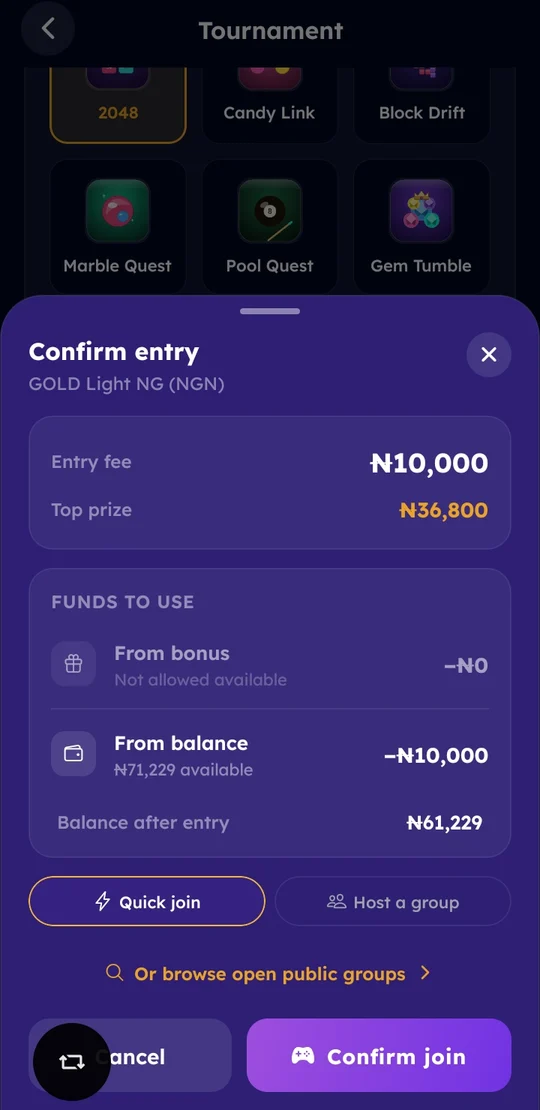
Every tournament has an entry level, starting at free. Paying an entry fee buys your seat in that tournament. It is not a stake against another player, and it is not a bet on an outcome — you are paying to compete, and what you get for it is a place in the group and your attempts at the board.
A percentage of the entry pool is the platform’s fee; the rest is the prize. Both numbers are shown before you commit, on the tournament itself.
Who you play against
Each player has an Elo rating for each game — the same rating system chess uses. It starts at 1200 and moves only on the results of settled groups: beat players expected to beat you and it climbs, lose to players you were expected to beat and it falls.
Matchmaking prefers opponents in your band, so a first-timer is not dropped into a group of veterans. Until three of your groups have settled, your rating has not converged and you are held in the middle band.
The board
The board is generated on the server from a single seed that belongs to the group, and issued to every player identically. It is not generated on your phone, and it does not differ between players. Two people in the same group, opening the same tournament minutes apart, get the same board.
The window
Each tournament has a fixed window and a fixed number of attempts. Your best score in those attempts is your result. When the window closes the group settles: scores are ranked, the prize is paid into the winner’s wallet, and the result is written to your game history.
A tie goes to whoever set the score first — the earlier run wins, because it was set with less information about what it needed to beat.
Group or leaderboard
A tournament runs in one of two shapes, and the tournament tells you which before you enter. A group is a small field that fills, plays together and settles — if it never reaches its minimum, it is cancelled and every entry is refunded. A leaderboard is an open window: join any time it is live, no waiting for a group to fill, and come back to improve your best run before it closes.
Who is in the room
Quick join hands you to the matchmaker, which prefers a group in your skill band and falls back to any open group rather than leaving you waiting. You can also host your own: a public group anyone can fill, or a private one that is invite-only.
A private group is kept out of matchmaking and out of every public listing, and its six-character code is the only way in — so the field is exactly the people you sent it to. The entry, the board, the fee and the payout rules are identical to a public group at the same level. Hosting changes who is in the room and nothing else.
Talking to the people you are playing
Every group has its own chat while the window is open, with replies, mentions and reactions. You can message anyone you have played directly, or name a group thread. It is also how a rematch starts — host a private table, send the code.
Getting paid
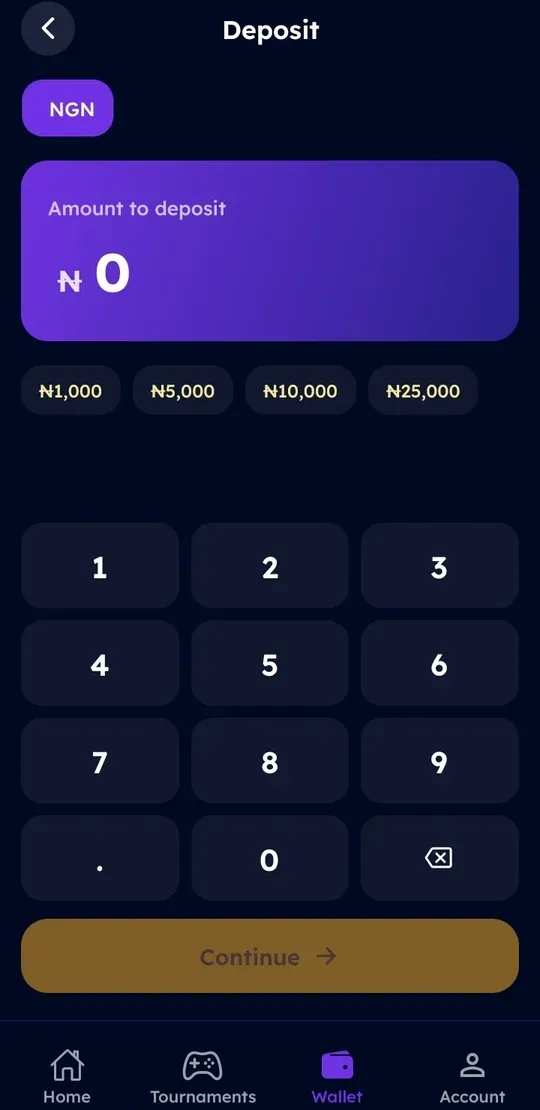
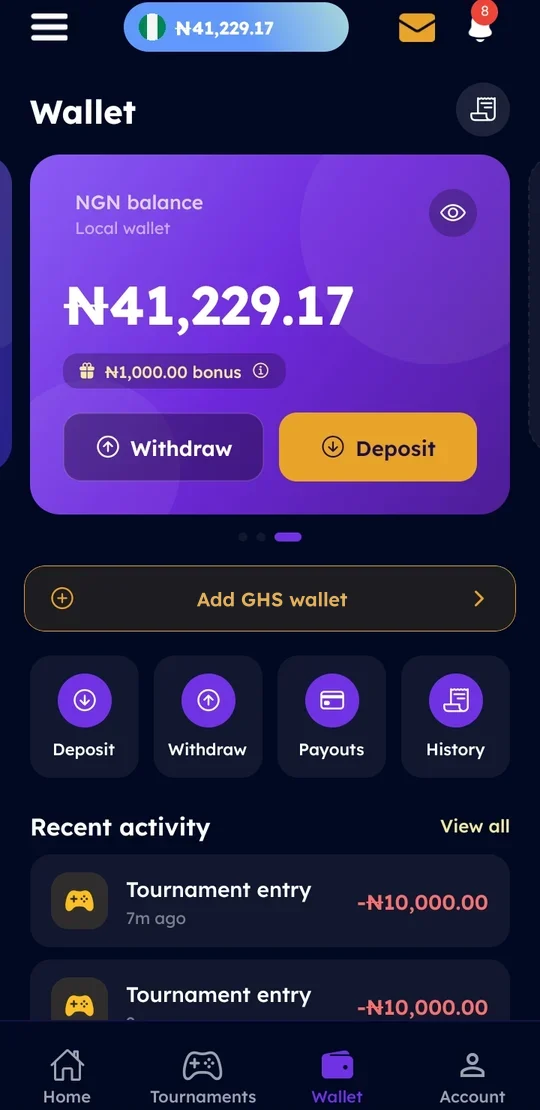
Prizes land in your in-app wallet. Your account holds a wallet in your own country’s currency — naira or cedis. Local tournaments run in local money against players in your country. Global tournaments put Nigeria and Ghana in one prize pool: priced in US dollars, paid for and won in your own currency at the rate shown when you join.
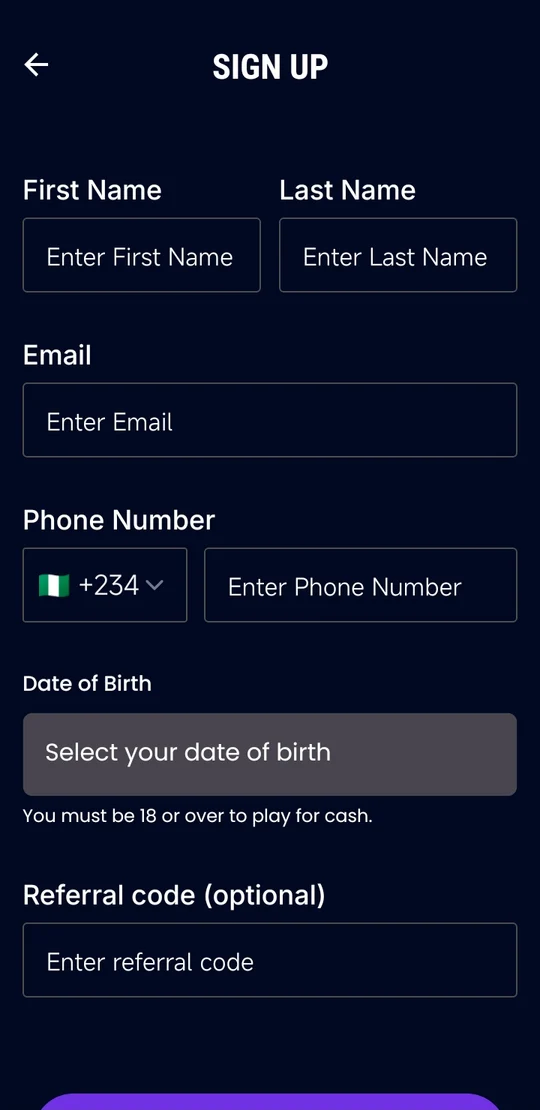
From the wallet you withdraw to a bank account (or mobile money in Ghana), subject to the verification thresholds shown on the withdrawal screen. Which local wallet you hold is set by your account country at sign-up, not by where your phone is — so travelling never changes it.
What it costs to look
Nothing. Every game has a free practice mode with no entry fee and no prize, and there are free tournaments too. Practice results never affect your rating.
The whole thing, in four screens
Real captures from the current build, in the order you meet them.